DevOps voi olla iso muutos yrityksen tekemiseen ja toimintamalleihin. Suin päin muutokseen ei kannata lähteä, eikä varsinkaan yrittää muuttaa kaikkea kerralla. Jos ketterä tekeminen ja DevOps-asiat eivät ole organisaatiossa vielä arkea, on suositeltavaa lähteä liikkeelle pienin palasin ja käynnistää toiminta selkeistä, tunnistetuista kehitystarpeista.
Kuinka sitten onnistua? Kokosimme kokemuksistamme tähän artikkeliin kymmenen tärkeää kohtaa, jotka on hyvä huomioida kehityshankkeissa, joissa otetaan käyttöön DevOps-toimintamalli ensimmäisiä kertoja.
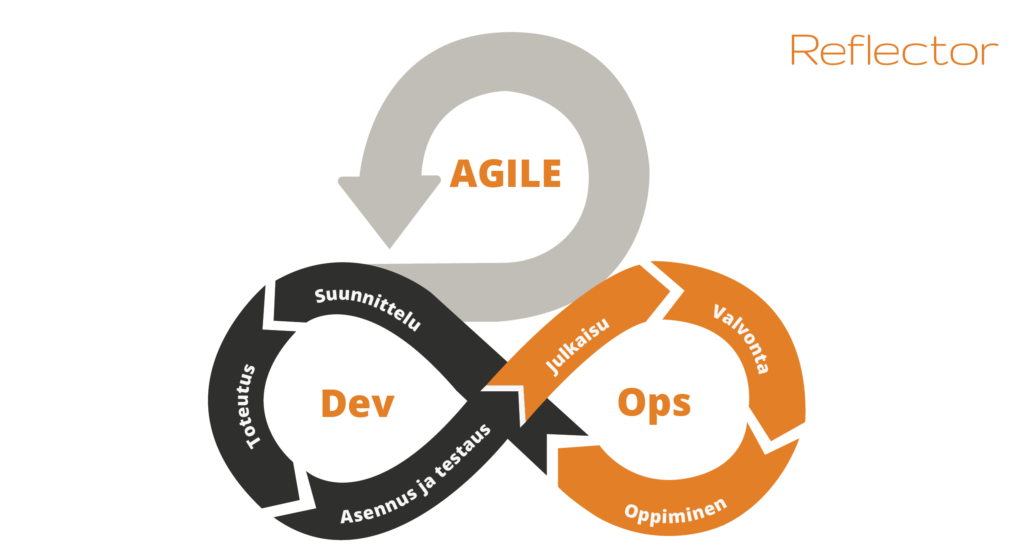
1. Tunnista organisaation nykytilanne
Vahvuudet ja haasteet. Haastattele kehittäjiä, testaajia, projektipäälliköitä, IT-spesialisteja ja loppukäyttäjiä.
2. Tee selkeä transformaatiosuunnitelma mitä tavoitellaan
Määritä prosessi, aikataulu, organisaatio, työkalut ja menetelmät. Ota tarvittaessa avuksi kokeneita menetelmäasiantuntijoita (Agile, Scrum, DevOps).
3. Harjoittele DevOps-prosessia ja ketteriä toimintatapoja pilottiprojektissa
Suositeltavaa on aloittaa ei-liiketoimintakriittisestä, mutta kuitenkin arvoa tuottavasta projektista. Esimerkiksi sisäinen kehitysprojekti sopii tarkoitukseen oikein hyvin.
4. Tuo yhteen oikeat henkilöt
Laaja-alainen osaaminen on tärkeää. DevOps-tiimin koko ei ole kiveen hakattu, mutta yli kymmenen hengen tiimi on jo iso. Valitse innovatiivisia ja teknisesti osaavia henkilöitä, jotka voivat ja haluavat työskennellä yli perinteisten rajojen ja jotka haluavat jakaa oppejaan myös muille.
5. Määritä käytettävät työkalut, jotka tukevat DevOps-prosessia ja ketterää tekemistä
Vaihtoehtoja on useita. Valitse välineet, jotka parhaiten sopivat työstettävään tuotteeseen. Aina ei kannata maksaa kalliita lisenssejä, jos niitä ei ennestään jo ole. Open source -työkaluillakin pääsee pitkälle.
6. Kouluta ja perehdytä jokainen tiimiläinen huolellisesti DevOps-prosessiin ja työkaluihin
Tee selväksi jokaisen rooli.
7. Iteraatiosuunnittelussa huomioi automaatiototeutuksiin menevä aika
Automaatiototeutus ei tapahdu itsekseen, vaan se vaatii paljon työtä ja ylläpitoa.
8. Automatisointi on DevOpsin peruspilareita
Kaikkea ei ole mahdollista automatisoida hetkessä, joten priorisoi, aloita pienestä ja lisää toteutusta jokaisessa iteraatiossa.
Ota tavoitteeksi automatisoida koko kehitysputki ensin CI-ympäristöön. Lisää myöhemmin asennus- ja Ops-automatiikkaa kattamaan muut QA- ja tuotantoympäristöt.
9. Monitoroi ja valvo 24 h
Tuo analytiikka ja lokit kaikkien saataville koelautanäkymiin. Hälytä ja raportoi poikkeavuuksista heti. Kirjaa havainnot backlogille ja korjaa ne prioriteettijärjestyksessä.
10. Kerää tekemisestä jatkuvaa palautetta
Tämä koskee sekä kehitystyöprosessia että itse toteutettavaa tuotetta, esim. uuden sovelluksen käyttöliittymää. Loppukäyttäjiltä kannattaa pyytää säännöllistä palautetta pidempään, ei vain käyttöönottovaiheessa.

Tomi cederqvist
DevOps- ja QA-asiantuntija, Reflector
Tomi on toiminut useissa eri tuotekehitysprojektien rooleissa yli 20 vuotta. Tomin keskeistä osaamista ovat testauksen ohjaus ja kehittäminen, testiautomaatio sekä DevOps. Tomilla on myös usean vuoden kokemus projekteista sovellusmodernisaation parissa.